Table 2. Optimal conditions for culturing Drosophila tissues during imaging
| Tissue | Optimized culture conditions | Imaging conditions |
|---|---|---|
| Early- to mid-stage egg chambers dissected from well-fed females (Figure 1) | Halocarbon oil (Series 95): Avoids dehydration/hypoxia | Early stages: Problem of activated and loose MT organization in aqueous media. Oil has higher refractive index than water. Good environment for injection. |
| Late-stage egg chambers (as above) | Grace’s medium (Sigma): Provides ionic, osmotic balance and nutrients | Late stages not susceptible to problems of early stages. |
| Embryos, dechorionated and dehydrated (Figure 2) | Halocarbon oil (Series 700, RI similar to glycerol) | Prevents excess dehydration while avoiding hypoxia (which causes changes to the cell cycle). Good environment for injection. |
| Halocarbon oil with Teflon breathable membrane | Better dehydration prevention for long-term development studies. Better bright-field imaging. Can help squash specimen for greater optical clarity (reduced spherical aberration). | |
| Aqueous medium | Water immersion objectives, which have longer working distance with high NA. |
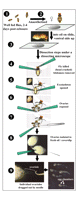
Figure 1.
Isolation of Drosophila egg chambers for live cell imaging
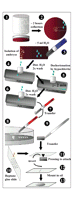
Figure 2.
Collection and mounting of Drosophila embryos for live cell imaging