Cover image
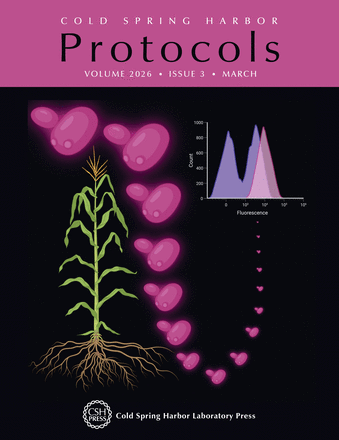
Plant hormone signaling pathways rely on the coordinated action of multiple molecular components to translate hormonal cues into precise cellular responses. Auxin is a key plant hormone that regulates many aspects of growth and development, and studies of auxin signaling have the potential to inform strategies to engineer hormone signaling for crop improvement. While a variety of assays exist to study auxin activity in plants, these are typically time- and resource-intensive or are not well suited for high-throughput quantitative analyses. Synthetic biology approaches using heterologous systems, such as the AuxInYeast system, offer an alternative strategy for dissecting auxin pathways. AuxInYeast relies on the expression of plant auxin signaling components in Saccharomyces cerevisiae and uses fluorescence-based reporters to enable high-throughput quantification of signaling activity. In this issue, Moss et al. describe how to use fluorescence flow cytometry and specific AuxInYeast strains to study maize auxin perception (doi:10.1101/pdb.prot108635). The cover image illustrates the AuxInYeast assay described, which combines maize-derived auxin signaling components expressed in yeast with flow cytometry readouts of auxin-dependent signaling activity. Image provided by the authors. Created in BioRender. Moss, B. (2026) https://BioRender.com/euorxew