Cover image
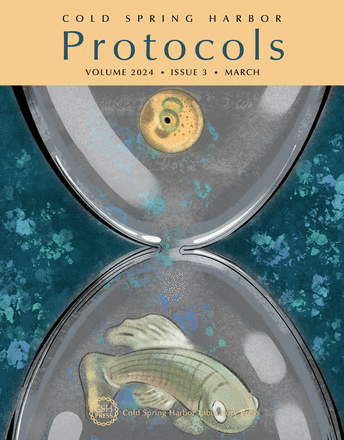
Chromatin structure and organization play a major role in gene regulation, and methods for the characterization of the chromatin landscape of cells and tissues have greatly enhanced our understanding in this area. A powerful approach for profiling chromatin accessibility in a genome-wide manner is the “assay for transposase-accessible chromatin with sequencing” (ATAC-seq). In this issue, Reeves et al. describe an optimized ATAC-seq protocol for embryos and adult tissues in the African turquoise killifish Nothobranchius furzeri, together with a pipeline for analyzing the resulting ATAC-seq data (doi:10.1101/pdb.prot107747). The cover image is an artistic rendition of the life of a killifish, from embryo to adulthood, symbolized through the metaphor of an hourglass. The hourglass serves as a dynamic canvas, illustrating the progression through different life stages, and the passage of time as sand moves from top to bottom. The light gray tracks inside the hourglass represent the chromatin of the killifish, which alludes to the importance of understanding the changes in chromatin structure in this system. Image courtesy of Rogelio Barajas.