

Sampling and Analysis of the Maize Microbiome
- 1Department of Crop and Soil Science, University of Georgia, Athens, Georgia 30602, USA
- 2Institute of Plant Breeding, Genetics, and Genomics, University of Georgia, Athens, Georgia 30602, USA
- 3The School of Plant Sciences, University of Arizona, Tucson, Arizona 85721, USA
- 4The Carl Woese Institute for Genomic Biology, University of Illinois at Urbana-Champaign, Urbana, Illinois 61801, USA
- ↵5Correspondence: jason.wallace{at}uga.edu
Abstract
Maize is an important plant for both global food security and genetics research. As the importance of microorganisms to plant health is becoming clearer, there is a growing interest in understanding the relationship between maize and its associated microbiome; i.e., the collection of microorganisms living on, around, and inside the plant. The ultimate goal of this research is to use these microbial communities to support more robust and sustainable maize production. Here, we provide an overview of recent progress in the field of maize microbiome research. We discuss the major microbiome compartments (rhizosphere, phyllosphere, and endosphere) and known functions of the microbiome. We also review the methods currently available to study the maize microbiome and its functions, and discuss how to carry out maize microbiome experiments, including both a general workflow (suitable for most microbiome analyses) and maize-specific experimental considerations.
INTRODUCTION
Maize is a significant crop for society, agriculture, and science. Originally from central Mexico, maize has spread to every inhabited continent, covering over 200 million hectares and producing over 1 billion tons of grain each year (FAOSTAT 2023). Maize is thus the most-produced grain on Earth and a keystone to both global food security and the global economy. Despite this, maize—and agriculture in general—are facing a host of challenges in the twenty-first century, including climate change, population growth, emerging diseases, and environmental degradation (for review, see Juroszek and von Tiedemann 2013; Vos and Bellù 2019).
There are many paths to address these challenges, including improved breeding methods (Hickey et al. 2017; Watson et al. 2018), improved production methods (Pretty and Bharucha 2014), gene editing (Karavolias et al. 2021), synthetic biology (Roell and Zurbriggen 2020), and harnessing agricultural microbiomes (Toju et al. 2018; Trivedi et al. 2021). Here, we focus on this last approach, with special emphasis on studying the maize microbiome. Maize is a particularly useful model for microbiome research because of both its significance in global food security and its value as a research model. Maize has played a central role in many scientific discoveries over the last century, such as heterosis (Shull 1908), mobile genetic elements (McClintock 1950), and epigenetics (Kermicle 1970), and this wealth of genetic knowledge makes maize an excellent model for understanding plant biology. Additionally, because of its importance to global agriculture, any significant findings in maize can be translated to the field relatively quickly. Already, work has shown that the maize microbiome is heritable (Peiffer et al. 2013; Walters et al. 2018), that it has responded to both breeding and natural selection over its history (Favela et al. 2021; He et al. 2024), that differences in the maize microbiome alter the fitness of the crop (Zhang et al. 2024), and that elite maize could be bred for more productive microbial associations (Petroli et al. 2023).
Despite these advances, there is still much to discover about the maize microbiome, especially with regard to how it can be harnessed for more productive and sustainable agriculture. The maize microbiome, however, can be difficult to study because it is an entire microscopic ecosystem—or rather, several of them—existing on, around, and inside the plant. In addition, studying and experimenting on these communities requires specialized techniques that many researchers may not be familiar with. Lack of familiarity with the field and with these techniques can pose a significant barrier for those trying to start studying the maize microbiome.
To help researchers overcome this barrier, we provide here a practical guide of methodologies to study the maize microbiome. Our goal is to give researchers an entry point into the field to accelerate our understanding of plant microbiomes. We first introduce the basic constituents of the maize microbiome and discuss its known functions, and then summarize the major methods used to study it, including maize-specific considerations for conducting microbiome studies. We also introduce specific protocols for sampling the microbiomes of maize roots (Favela et al. 2024), leaves (Wallace 2024), and seeds (Wallace and Laspisa 2024), along with protocols for preparing 16s sequencing libraries (Wallace and Griffis 2024), and manipulating the maize microbiome (Raglin et al. 2024), all of which are included as part of this collection. We expect these articles to be useful for anyone looking to start research into the maize microbiome and we hope they will facilitate additional work in this area.
THE MAIZE MICROBIOME
All plants, including maize, are colonized by an incredible diversity of microscopic organisms. These diverse assemblages are collectively known as the plant's microbiome, and the individual organisms interact with each other and their plant host. The maize microbiome plays a role in plant productivity (Tkacz and Poole 2015), stress tolerance (Lau and Lennon 2012), disease susceptibility (Kwak et al. 2018), and agricultural sustainability (Favela et al. 2024). Furthermore, different parts of the plant have unique microbial populations with different functions (for review, see Singh and Goodwin 2022), and thus there is no “single” microbiome for the entire plant. Although there are many different ways to subdivide the plant microbiome, the most common divisions consist of microbial communities originating from around the roots (rhizosphere), leaf surfaces (phyllosphere), and interior tissue (endosphere) (Fig. 1). We discuss these below.
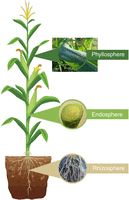
Maize microbiome compartments. The maize microbiome is usually divided into the rhizosphere (around the roots), phyllosphere (aboveground surfaces), and endosphere (interior tissue). Additional subdivisions are possible, as described in the text. The figure was modified from Wallace and May (2018), with permission.
Rhizosphere
The rhizosphere is classically defined as the soil directly bound to roots (Lynch and de Leij 2012), and it is the primary site of nutrient acquisition for the plant. In this region, plants exude large quantities of carbon (via sugars, amino acids, organic acids, secondary metabolites, mucilage, and sloughed-off cells), which shape the chemistry of the rhizosphere and impact microbial ecology (Hartmann et al. 2008; Favela et al. 2023). Indeed, variations in secondary metabolites like benzoxazinoids and diterpenoids modulate microbial associations in the rhizosphere (Cotton et al. 2019; Kudjordjie et al. 2019; Murphy et al. 2021). Conversely, the presence of specific taxa in the maize rhizosphere can shape nutrient uptake (Bar-Ness et al. 1992; Reyes et al. 2002). The rhizosphere is generally the most diverse microbiome compartment in maize. It varies both across geographical locations and throughout the growing season, with some influence from plant genetics (Walters et al. 2018). The rhizosphere is often contrasted with bulk soil, meaning soil that is not actively influenced by plant roots.
Phyllosphere
The phyllosphere is the aboveground, exterior community of maize. It is shaped by plant structures like stomata, trichomes, and veins, and is exposed to a much harsher environment than the rhizosphere (Lindow and Brandl 2003; Vorholt 2012). Microbial populations in the phyllosphere are typically less abundant and diverse than elsewhere on maize, but also more dynamic (Wallace et al. 2018; Koskella 2020). The phyllosphere microbiome is inoculated from microorganisms present in the air (Zhou et al. 2020), and hence they are more sensitive to variability in wind and weather conditions. Despite their relative compositional simplicity, phyllosphere communities can have significant impacts on the maize plant; for example, foliar introduction of specific microbes can result in up to a 10% increase in total biomass (Chaudhry et al. 2021).
Endosphere
Plants host a vibrant community of microbes throughout their own tissues. This “endosphere” consists of all internal spaces of the plant, including the vasculature, apoplastic spaces, and between and inside individual cells (Compant et al. 2021). Whether endophytes are mutualistic, pathogenic, or commensal has been widely debated in the literature (Wilson 1995; Brader et al. 2017), and the current consensus is that there is a spectrum of interactions determined by the host plant, the specific microbe, and the surrounding environment (Wippel 2023). Mutualistic endophytes of maize can perform various functions, such as nitrogen fixation (Zhang et al. 2022) or hormone production (Pal et al. 2021). It is thought that the plant immune system and internal variation in plant chemistry control the abundance and diversity of endophytic microbial populations (Hounsome et al. 2008; Liu et al. 2017; Oukala et al. 2021).
FUNCTIONS OF THE MAIZE MICROBIOME
The maize microbiome can have significant impacts on the plant. The most obvious of these is disease, in which specific members of the microbiome significantly disrupt the host, up to and including host death. However, because maize diseases have been extensively reviewed elsewhere (e.g., Redinbaugh and Stewart 2018; Valle-Torres et al. 2020; Osdaghi et al. 2023), we instead focus here on the more beneficial aspects of the microbiome. These beneficial aspects are often what maize microbiome research seeks to understand, and the majority of these found to date fall under four broad categories: nutrient acquisition, abiotic stress tolerance, pathogen exclusion, and immune modulation. We discuss these below.
Nutrient Acquisition
The maize microbiome can be important for nutrient acquisition. Many maize–microbiome nutrient interactions occur in the rhizosphere, where the plant can sculpt the community through “rhizosphere priming” with various metabolites (Kumar et al. 2016; Xiong and Lu 2022). Nutrient interactions, however, can also occur in other compartments, though they are less well studied. The effect of the microbiome on nutrients is most obvious for nitrogen balance, where soil microbes are responsible for releasing nitrogen from dead organic matter (Kuzyakov 2002), usually in the form of ammonia (NH4); direct nitrogen fixation also occurs, albeit at a low rate (Dommergues et al. 1973; Montañez et al. 2009). This type of nutrient provisioning by plant microbiomes is of particular interest for its potential to replace synthetic fertilizers with microbially mediated nitrogen acquisition, ideally without yield penalties. However, soil microbes can also reduce available nitrogen by using it themselves or converting ammonia to easily leached nitrate (NO3) and nitrite (NO2), nitrous oxide (N2O, a greenhouse gas), and nitrogen gas (N2) (Stein and Klotz 2016). Notably, maize can inhibit some of the latter processes via biological nitrification inhibition (BNI), where exudates inhibit the microbes that perform these reactions (Otaka et al. 2022; Petroli et al. 2023). Certain Mexican landraces of maize also host nitrogen-fixing bacteria in mucilage on aerial roots, which can provide up to 30%–80% of nitrogen requirements to maize during reproductive growth stages (Van Deynze et al. 2018; Pankievicz et al. 2022). Nitrogen-fixing taxa have also been isolated from the phyllosphere (Abadi et al. 2021) and endosphere (Zhang et al. 2022), but their impact on plant growth and fitness is uncertain.
Other nutrient-related processes mediated by the maize microbiome include phosphorus and iron acquisition (Chorianopoulou et al. 2015; Cozzolino et al. 2021; Zhang et al. 2023) via production of nutrient-provisioning enzymes (Zhang et al. 2020), nutrient chelating molecules such as siderophores (Akinola et al. 2021; Verma et al. 2021), and alterations in rhizosphere pH, which alters the dynamics of mineral dissolution (De Zutter et al. 2021; Fadiji et al. 2021; Devi et al. 2022; Rodrigues et al. 2023). Additionally, arbuscular mycorrhizal fungi (AMFs) mediate phosphorus uptake by increasing the surface area of roots and scavenging soil for phosphorus in return for maize-derived carbohydrates (Battini et al. 2017; Lu et al. 2023). The global effect of nutrient deficiencies on maize yield warrants exploring nutrient-provisioning functions of the maize microbiome to improve resilience across environments.
Abiotic Stress Tolerance
Some microbes have been shown to specifically boost abiotic stress tolerance in maize; these functions could be particularly important for crop resiliency in the face of global climate disruption (Hartman and Tringe 2019). AMFs, for example, can boost water uptake to provide drought resilience (Ruiz-Lozano et al. 2022; Santana et al. 2023), potentially through the regulation of maize aquaporins (Bárzana et al. 2014; Quiroga et al. 2017), photosynthetic efficiency (Hu et al. 2020), reactive oxygen species signaling (Zhan et al. 2018; Begum et al. 2019), and root morphology and hormone physiology (Ren et al. 2019; Hu et al. 2020; Quiroga et al. 2020; Chandrasekaran 2022). AMFs have also been implicated in salinity resistance by maintaining ion homeostasis in maize roots (Estrada et al. 2013), as well as in tolerance to heavy metals (Weissenhorn et al. 1995; Guo et al. 1996; Vivas et al. 2006; Bai et al. 2008; Merlos et al. 2016; Hao et al. 2021; Yin et al. 2021; Rizvi et al. 2022).
In addition to AMFs, numerous bacterial-associated functions within the maize microbiome also contribute to abiotic stress tolerance mechanisms (Jat et al. 2021; Vescio et al. 2021). Plant growth–promoting rhizobacteria (PGPR) influence drought resilience through various mechanisms, including exopolysaccharide formation in the root zone (Naseem and Bano 2014; Molina-Romero et al. 2017; Rebelo Romão et al. 2022), which reduces root desiccation (Naseem et al. 2018). Microbiomes can also quench ethylene signaling through the production of ACC (1-aminocyclopropane-1-carboxylate) deaminase, which mediates root adaptation to drought, flooding, and salinity stress (Nadeem et al. 2009; Gupta and Pandey 2019; Chukwuneme et al. 2020; Chandwani and Amaresan 2022). Combining both plant growth–promoting bacteria and fungi can produce synergistic beneficial effects for maize under abiotic stress (Cozzolino et al. 2021; Xu et al. 2022).
Pathogen Exclusion
The maize microbiome impacts disease ecology and onset through complex interactions between beneficial microbiota, the host, and pathogens (Raaijmakers et al. 2009; Li et al. 2021). Pathogen exclusion can occur through competition for nutrient resources (Spragge et al. 2023) or through direct mechanisms, such as antibiosis (Saeed et al. 2021). Microbial communities produce a diverse arsenal of antimicrobial compounds, including antibiotics, nonribosomal peptides, and volatile compounds, which suppress the growth and accumulation of pathogens (Whipps 2001; Mendes et al. 2011). Soil viral communities also play a role in pathogen suppression (Yang et al. 2023), and the pathogen-suppressing functions of the microbiome can be leveraged to manipulate pathogen pressures. For example, artificially designed synthetic communities (SynComs) containing maize rhizosphere taxa can suppress Fusarium through dynamic ecological processes (Xun et al. 2023). Endophytic microorganisms also play a role in pathogen suppression and have been leveraged in SynComs to suppress pathogen infection (Ali et al. 2021). The pathogen suppression activities of the maize microbiome are an emerging field of study, but one that is of great importance given the damage plant pathogens cause and the adverse economic and environmental consequences of widespread pesticide use.
Immune Modulation
Microbial taxa can interact with the maize immune system to modulate growth and defense through various molecular mechanisms. Growth-promoting microorganisms can alter host defenses by producing plant growth–promoting hormones, including indole acetic acid, gibberellic acid, abscisic acid, and salicylic acid (Cohen et al. 2009; Pérez-Flores et al. 2017; Vanissa et al. 2020; Gebauer et al. 2021; Lu et al. 2022; Ma et al. 2022; Ravelo-Ortega et al. 2022; Ramos-Garza et al. 2023). They can also mediate ethylene signaling (Bouffaud et al. 2018; Ravanbakhsh et al. 2018; Gebauer et al. 2021) and induce jasmonic acid defense cascades (Agostini et al. 2019, 2023). Research disentangling the hormone-mediated chemical interactions in the rhizosphere, phyllosphere, and endosphere is a growing field of plant microbiome research due to its potential to positively influence plant defense pathways in the face of biotic stress within agricultural ecosystems.
The process wherein plant growth–promoting microorganisms cause a general increase in defense gene expression is termed induced systemic resistance (ISR) (Bakker et al. 2013; Ahmad et al. 2020; Qu et al. 2020; Cao et al. 2023). Various microbial taxa impact ISR to influence plant defense responses, including bacteria such as Bacillus, Pseudomonas, and Actinomyces, as well as fungal taxa such as Trichoderma, Metarhizium, and AMFs (Saravanakumar et al. 2016, 2017, 2018; Contreras-Cornejo et al. 2018; Ansari et al. 2020; Mashabela et al. 2022; Ravelo-Ortega et al. 2022; Agostini et al. 2023; Cao et al. 2023; Pal et al. 2023; Vanacore et al. 2023). Specific beneficial microbes are often considered biological control agents and have been proposed as alternatives to synthetic pesticides (Fang et al. 2013; Torres-Rodriguez et al. 2022; Vanacore et al. 2023), though these are more about complementing the plant immune system instead of affecting it directly.
ANALYSIS OF THE MAIZE MICROBIOME
Analysis of the maize microbiome covers a wide array of topics and methods. Most of these can be subdivided based on the compartment being analyzed, the methods used, and the biological question being asked, and we organize our discussion below based on these topics.
Maize Microbiome Compartments
As mentioned earlier, the maize microbiome can be generally divided into the rhizosphere, phyllosphere, and endosphere (Fig. 1). However, each of these contains many subcompartments, and specific research projects usually aim to sample only a particular subset of microbiome communities.
Bulk soil is technically not part of the maize microbiome, because it consists of the soil outside the major influence area of the plant. It is thus usually sampled as a control, often from halfway between maize rows or in unplanted alleys between plots. Soil is best sampled with a soil corer, and because it can be highly heterogenous, taking multiple samples and homogenizing them is recommended.
The rhizosphere encompasses the area around the roots (Lynch and de Leij 2012). It can be further divided into the rhizosphere proper (organisms in the soil matrix but not attached to the plant) and the rhizoplane (organisms physically attached to the root surface). The rhizosphere is usually separated from bulk soil by vigorous shaking; soil that adheres to the roots gets labeled rhizosphere, whereas soil that does not is labeled bulk soil (technically, there is a gradient between highly influenced rhizosphere next to roots, the less influenced “root zone” a little further away, and uninfluenced bulk soil, but there are no clear boundaries between them; the shaking method may be imprecise, but it is close enough for most researchers). For rhizoplane microbes, their separation from the root usually requires vigorous washing and/or sonication (Richter-Heitmann et al. 2016). A study in Setaria, however, found that chitinase and lysozyme (which dissolve fungal and bacterial cell walls, respectively) could be used to remove microbes from the root surface, so that the rhizoplane could be deduced by comparing treated and untreated samples (Chaluvadi and Bennetzen 2018). Bleach could presumably be used to similar effect (Richter-Heitmann et al. 2016). Much less studied is the spermosphere, the soil region immediately surrounding seeds before and shortly after germination (Johnston-Monje et al. 2021).
The phyllosphere is the aboveground surface of the plant. Strictly speaking, the phyllosphere refers to just the leaves, with other communities—most without specific names—including stalk surfaces, aerial and brace roots, pollen, silks, and seeds. Aboveground surfaces are often the easiest to sample, though separating surface microbes (“epiphytes”) from endophytes (see below) can be challenging. Various researchers have tried leaf washes (Kadivar and Stapleton 2003) or sonication (Methe et al. 2020), whereas others have simply accepted that results would be a mix of exterior and interior communities (Wallace et al. 2018). Most of these microbiomes are poorly studied in maize.
The endosphere covers all interior parts of the plant. As with the phyllosphere, there are many subdivisions here, depending on which part of the plant is being looked at (roots [both above and below ground], stalks, leaves, seeds, pollen, silks, etc.; basically, all possible tissues). The endosphere is usually isolated by sterilizing the tissue surface with bleach prior to sample extraction. Live endophytes have been isolated from maize for decades (for review, see Wallace and May 2018). Sequencing-based methods struggle, however, because there is no good way to separate the microbes from the host. Amplicon-based methods that target specific genes with PCR can partially overcome this (see below), but there are still no reliable methods for shotgun metagenomics of the endosphere.
Analysis Methods
Methods for the analysis of the maize microbiome usually fall into one of four areas: isolation, inoculation, amplicon sequencing, or shotgun omics technologies.
Isolation of live microbes is the most mature method. It consists of taking a maize sample, grinding it up (if necessary), and growing microbes from the sample (Sanders 2012; JoVE Science Education Database 2023). Microbes are usually plated onto agar plates to get pure cultures, with different media used for different targets (e.g., lysogeny broth [LB] or nutrient agar for copiotrophic bacteria, R2A agar for oligotrophic ones, potato dextrose agar for fungi, etc.). Isolating microbes used to be a common way to survey the community, but has now been replaced with sequencing-based methods (see below). Isolations, however, are still important for assembling libraries of maize-associated microbes to test for interesting biological properties, usually with an eye toward reinoculating them onto maize to produce a specific benefit.
Inoculation of microbes is how the effect of specific microbes or communities is tested. At its crudest, this can be done with a slurry or mixture of microbes from some source (usually soil) that is mixed into the soil or potting mix in which the maize seed will be planted. More controlled inoculations involve growing specific microbes in pure culture and inoculating them at specific locations (usually seeds, but sometimes onto leaves, silks, or other tissues of interest). Such inoculations can be done either with individual microbes or with SynComs of a specific mix of microbes—anywhere from two microbes to up to dozens. Generally speaking, inoculations are done when the researcher has a specific phenotype in mind and wants to assess the effect of the microbes. This includes when the phenotype is the microbial community itself, such as testing how a new microbe shifts the existing community or how a SynCom changes under stress.
Amplicon sequencing is the most widespread sequence-based method to assay the maize microbiome (e.g., Walters et al. 2018; Wagner et al. 2020; Rossmann et al. 2021). It involves amplifying specific regions of DNA via polymerase chain reaction (PCR) and sequencing the resulting “amplicons” to survey the diversity present in the community. The most common amplicon targets are 16s rRNA for bacteria or the internal transcribed spacer (ITS) region for fungi, though other targets are possible depending on which microbes are being investigated (e.g., the nifH gene for nitrogen-fixing microbes) (Favela et al. 2022). The main issue with amplicon analysis, however, is that many primer sets also amplify the (much more abundant) maize DNA, especially from organelles. Primers that exclude plant DNA exist but can distort which microbes are observed (Giangacomo et al. 2021), whereas the most popular other option is using PCR-blocking peptide nucleic acids (PNAs), which must be designed for each amplicon (default PNAs against chloroplast and mitochondria 16s rRNA are available commercially from PNA Bio). In our hands, the commercial antichloroplast “pPNA” does a very good job of excluding maize chloroplasts without changing the underlying community (Giangacomo et al. 2021), whereas the antimitochondria “mPNA” is functional but slightly less effective (see Wallace and Griffis 2024, in this collection).
Metagenomics (and its relatives, metatranscriptomics, metaproteomics, and metametabolomics) refers to untargeted sampling of the entire microbiome. These methods are much more comprehensive than amplicon-based analyses, and much better at getting at the actual functions the microbiome is performing. However, they are also more expensive because of the deeper sequencing (or corresponding methodology) required for each sample. It is also difficult—or impossible—to separate the plant from the microbes for many samples (e.g., endophytes), which is why these methods tend to be used most for the rhizosphere (e.g., Chukwuneme et al. 2021; Li et al. 2023), though they have been successfully used to identify maize viruses in plant tissue (Wamaitha et al. 2018; Lappe et al. 2022). Maize metaomics is still an emerging field, and there are likely many interesting insights to be gained here, but the technical hurdles are still very challenging.
MICROBIOME ANALYSIS CONSIDERATIONS
Microbiome analysis is a complex topic, and we cannot cover all the details and considerations here. For a more detailed discussion, we refer readers to reviews on microbiome analysis in general (Knight et al. 2018), microbiome analysis in plants (Lucaciu et al. 2019), 16s amplicon analysis (Pollock et al. 2018), and shotgun metagenomics (Quince et al. 2017). Here, we instead review several of the most common issues that tend to complicate maize microbiome analysis.
First, effect sizes tend to be small in microbiome studies, requiring many replicates to test well. Although three replicates can work, four to five is better, and even more is better still. Also keep in mind your growing conditions: a field study probably needs more replicates than the same experiment in a highly controlled growth chamber, for example. Ideally one would perform a power analysis to determine the needed sample size, though some of the parameters (for example, variability among samples) can be difficult to determine without preliminary data (for review, see Ferdous et al. 2022).
Sample contamination is also always a threat, especially because human hands are literally covered in microbes. Always wear gloves when collecting and handling samples; we recommend double-gloving so that the outer pair can be changed without sticking to the (probably very sweaty) hands during fieldwork. Between samplings, clean your tools with alcohol to remove any carryover (this is primarily physical removal, but it can also be used for sterilization). Be aware that some sterilization methods, like autoclaving, still leave microbial DNA behind; if that could be an issue, harsher methods like bleach or UV sterilization may be needed.
Sample definitions can vary from experiment to experiment. For example, there is no good definition of what counts as “rhizosphere” for sampling, with most researchers vigorously shaking plants and counting whatever sticks to the roots. Be sure to clearly describe how you defined each sample and the methods used to collect them.
DNA extraction inevitably introduces some amount of bias in terms of the microbes you are able to detect and identify (Martin-Laurent et al. 2001; Elie et al. 2023). It is best to use the same extraction method for all samples in an experiment to minimize confounding bias across sample types. What method you use is usually dictated by the most difficult samples in your experiment, often either soil (due to enzyme-inhibiting humic substances) (Wnuk et al. 2020; Wydro 2022) or seeds (due to high starch content) (Abdel-Latif and Osman 2017).
Host contamination is a significant issue for any plant-associated samples. For example, the universal primers for 16s rDNA also amplify maize organelles, which are usually much more abundant than bacteria. Primers that exclude plant sequences (see Lucaciu et al. 2019) and PCR-blocking PNAs (Lundberg et al. 2013) are the most common ways to avoid this, though each has shortcomings (e.g., discriminating primers also skew the microbial community) (Giangacomo et al. 2021). For metagenomics, the process is even harder. Surface microbes (rhizoplane, phyllosphere) can be washed or sonicated off to enrich them before sequencing (Kadivar and Stapleton 2003; Methe et al. 2020), which is doable but tedious. We know of no methods to reliably separate endophytes from maize tissue. Although one can just sequence to a much deeper depth, this quickly becomes expensive.
To help with maize microbiome analysis, we provide a suite of protocols for microbiome research in maize as part of this collection. We describe specific protocols for sample collection of the maize rhizosphere and root endosphere (Favela et al. 2024), leaves (both surface and interior) (Wallace 2024), and seed endosphere (Wallace and Laspisa 2024). These protocols cover the most frequent use cases for sampling the maize microbiome, and many of the steps can be generalized to other samples (e.g., the surface sterilization method for seeds can be used on most other tissues) and even host species. Each of these protocols results in samples suitable for either DNA extraction or isolation of live microbes. In addition, we provide a protocol for 16s amplicon library preparation (Wallace and Griffis 2024), including the use of staggered primers (to increase sequencing quality) and peptide nucleic acids (to exclude organelles) (Lundberg et al. 2013). This protocol starts with purified DNA and ends with a library suitable for Illumina sequencing. Last, we also include a protocol for the inoculation of specific microbes (Raglin et al. 2024) to test their effect on maize growth or other phenotypes of interest. This protocol is suitable for either individual microbes or defined microbial mixtures (SynComs); it assumes you already have such microbes on hand, such as from isolating them with one of the earlier protocols.
CONCLUDING REMARKS
In conclusion, the maize microbiome consists of multiple rich, microbial ecosystems interacting with both the environment and the maize plant. These communities provide several potential benefits to maize, ranging from nutrient acquisition to stress tolerance and growth promotion. Studying these communities can be difficult, but the right techniques can yield great insight into how maize and its microbiome work together. Although several major insights about the maize microbiome have been made to date, we anticipate that much more remains to be discovered about these communities and how to harness them for improved and more sustainable maize agriculture. This review and the associated protocols should provide a good entry point for those looking to start maize microbiome research, and we wish those doing so the best of luck.
COMPETING INTEREST STATEMENT
The authors declare no competing interests.
AUTHOR CONTRIBUTIONS
Project administration: J.G.W. Conceptualization: J.G.W., A.F., and S.R. Writing—original draft: J.G.W., A.F., and S.R. Writing—review and editing: J.G.W., A.F., and S.R.
ACKNOWLEDGMENTS
We thank Sean Montgomery for assistance in preparing Figure 1. Support for the development of these protocols was provided to A.F. by National Science Foundation Postdoctoral Fellowship in Biology 220899.
Footnotes
-
From the Maize collection, edited by Candice N. Hirsch and Marna D. Yandeau-Nelson. The entire Maize collection is available online at Cold Spring Harbor Protocols and can be accessed at https://cshprotocols.cshlp.org/.
REFERENCES
*Reference is also in this subject collection.
- ↵
- ↵
- ↵
- ↵
- ↵
- ↵
- ↵
- ↵
- ↵
- ↵
- ↵
- ↵
- ↵
- ↵
- ↵
- ↵
- ↵
- ↵
- ↵
- ↵
- ↵
- ↵
- ↵
- ↵
- ↵
- ↵
- ↵
- ↵
- ↵
- ↵
- ↵
- ↵
- ↵
- ↵
- ↵
- ↵
- ↵
- ↵
- ↵
- ↵
- ↵
- *.↵
- ↵
- ↵
- ↵
- ↵
- ↵
- ↵
- ↵
- ↵
- ↵
- ↵
- ↵
- ↵
- ↵
- ↵
- ↵
- ↵
- ↵
- ↵
- ↵
- ↵
- ↵
- ↵
- ↵
- ↵
- ↵
- ↵
- ↵
- ↵
- ↵
- ↵
- ↵
- ↵
- ↵
- ↵
- ↵
- ↵
- ↵
- ↵
- ↵
- ↵
- ↵
- ↵
- ↵
- ↵
- ↵
- ↵
- ↵
- ↵
- ↵
- ↵
- ↵
- ↵
- ↵
- ↵
- ↵
- ↵
- ↵
- ↵
- ↵
- ↵
- ↵
- ↵
- ↵
- ↵
- ↵
- *.↵
- ↵
- ↵
- ↵
- ↵
- ↵
- ↵
- ↵
- ↵
- ↵
- ↵
- ↵
- ↵
- ↵
- ↵
- ↵
- ↵
- ↵
- ↵
- ↵
- ↵
- ↵
- ↵
- ↵
- ↵
- ↵
- ↵
- ↵
- ↵
- ↵
- ↵
- ↵
- ↵
- ↵
- ↵
- ↵
- ↵
- ↵
- *.↵
- *.↵
- *.↵
- ↵
- ↵
- ↵
- ↵
- ↵
- ↵
- ↵
- ↵
- ↵
- ↵
- ↵
- ↵
- ↵
- ↵
- ↵
- ↵
- ↵
- ↵
- ↵
- ↵
- ↵
- ↵



