Cover image
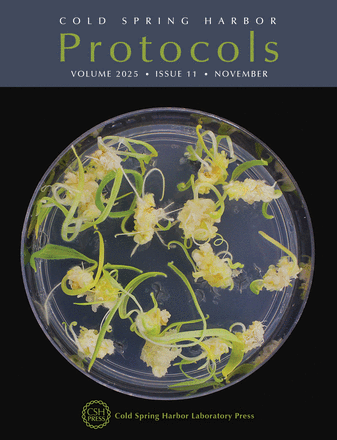
Maize (Zea mays L.) is an essential global crop and a major model organism for genetics research. Maize genetic transformation—first implemented in the 1990s—has become a key tool not only for maize functional genomics but also for introducing novel traits for crop improvement, which is key for meeting evolving agricultural needs in the face of ecological and climate change challenges. Conventional methods rely on Agrobacterium-mediated transformation of immature maize embryo explants, and the B104 inbred line is a popular genotype for transformation. In this issue, Kang et al. describe a rapid and robust Agrobacterium-mediated maize B104 transformation protocol that uses immature embryos as explants. The method offers several improvements over previous protocols, including a shorter time to obtain rooted transgenic plants, lower escape rates (i.e. frequency of nontransgenic generated plantlets), and the use of a new visible marker, RUBY, to easily monitor the transformation process and transgene segregation (doi:10.1101/pdb.prot108595). The cover image shows vigorously regenerating maize shoots on maturation medium, 5 weeks after Agrobacterium-mediated transformation of immature embryos. Image provided by the authors.