

Cover image
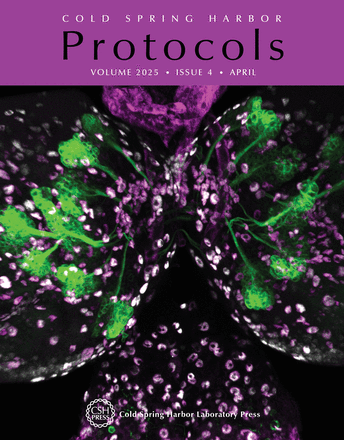
Complex behaviors are mediated by diverse neurons and glia, and various neural stem cell–intrinsic and –extrinsic gene programs have been identified that are thought to play key roles in generating these cell types. The fruit fly Drosophila melanogaster serves as a powerful model system for studying nervous system development and function, and features sophisticated genetic tools that allow both tracing of neuronal origins to specific neural stem cells (NSCs) and birthdating; i.e., determining the time when a particular neuron is born during development. In Drosophila, a special class of NSCs, called Type II NSCs, follows an advanced division mode to generate lineages for the central complex, a higher-order brain structure evolutionarily conserved across insects. In this issue, Wani et al. describe a protocol for a system called cell class–lineage intersection (CLIn), which enables the tracking and birthdating of Type II NSC lineages during larval development (doi:10.1101/pdb.prot108442). The cover image shows an immunostaining of Drosophila larval Type II NSC lineages (green), costained with the markers Asense (magenta) and Deadpan (white). Image provided by Mubarak Hussain Syed.

