Cover image
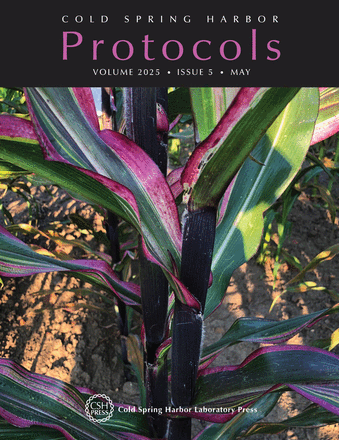
Flavonoids are a large class of plant-specialized phenolic metabolites that participate in various plant–environment interactions, including responses to biotic and abiotic factors. The most colorful manifestation of flavonoids is in the form of pigments. Anthocyanins are a specific type of flavonoid pigment that accumulate in fruits and flowers, and serve a crucial role in attracting pollinators and seed-dispersing organisms. These pigments exhibit a wide range of chemical structures, determined by variations in their anthocyanidin core and numerous chemical modifications. In this issue, Jiang et al. describe a protocol for the extraction and quantification of total anthocyanins in maize—as well as for the characterization of anthocyanidin core structures and specific anthocyanins—using spectrophotometry, high-performance liquid chromatography (HPLC), and ultra-high-performance liquid chromatography–two-dimensional mass spectrometry (UHPLC-MS/MS) (doi:10.1101/pdb.prot108577). The cover image features maize plants from line OC19 (PI 596506), characterized by their purplish stems and leaves. Image provided by Nan Jiang.