Cover image
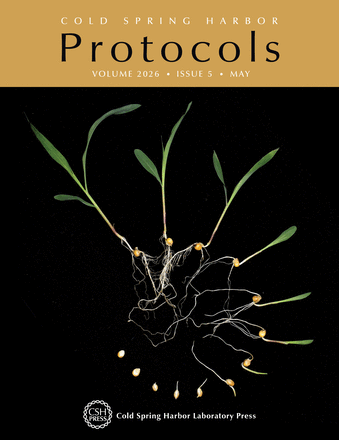
Zea mays (maize) is among the most important crops worldwide and a classical model organism for genetics research. Conducting successful experiments in maize genetics and breeding requires accurate identification of developmental stages, as key experimental procedures are strictly dependent on the plant reaching a specific stage of development. Moreover, proper monitoring of development enables meaningful comparisons between different lines and populations. In this issue, Salazar-Vidal et al. describe how to monitor growth and identify developmental stages in the maize reference inbred line B73, providing a practical framework for staging plants accurately throughout the growing season and planning activities such as data collection, pollination, or harvesting (doi:10.1101/pdb.prot108637). The cover image shows the development of B73 maize seedlings over the course of 15 days, arranged counterclockwise from kernels prior to imbibition (bottom left) to the V2 stage (top left). Photograph by Miriam Nancy Salazar-Vidal, with the assistance of Melissa Draves.