

Cover image
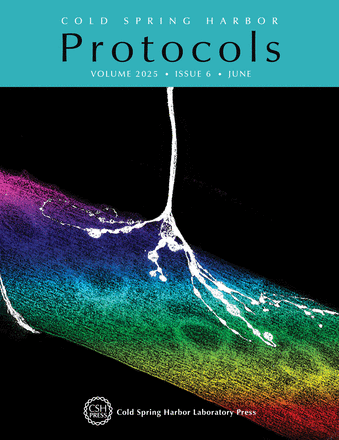
Axons damaged by acute injury, by toxic insults, or during neurodegenerative diseases undergo degeneration, and studies using nervous system injury paradigms in various model systems, including the fruit fly Drosophila melanogaster, have revealed conserved molecular pathways that are triggered by axon damage. Indeed, simple assays that introduce injuries to axons in either adult flies or larvae have proven particularly powerful for uncovering mechanisms of axonal degeneration and clearance. The larval neuromuscular junction has been established as a good model to characterize the cellular changes that occur in synapses undergoing degeneration and to identify conditions that can protect axons and synapses from degeneration. In this issue, Waller et al. describe a simple method for inducing nerve crush injury to motoneuron and sensory neuron axons in the peripheral nerves in second- or early third-instar larvae (doi:10.1101/pdb.prot108169). The cover image shows a motoneuron axon (gray) synapsing onto a muscle (multicolor) to form the neuromuscular junction in a Drosophila larva. Image provided by the authors.

