Cover image
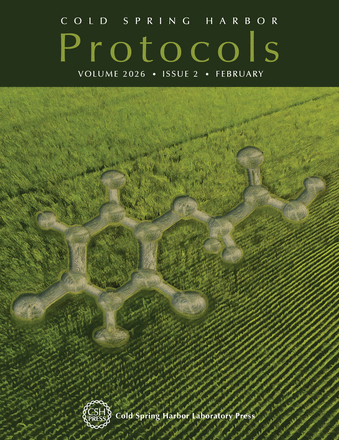
Plant hormones play key roles in plant morphology, physiology, and stress responses, and studies of their biology and effects are greatly facilitated by the exogenous application of these compounds. Although methods for hormone application are generally straightforward, the use of approaches that are tailored to the species, developmental stage, and tissue under investigation are required to obtain robust data. Maize is an established model for basic and applied research, and an excellent system for studying the effects of hormones on developmental and stress responses in a cereal crop. Several methods have been developed for the exogenous application of plant growth regulators in maize, enabling the analysis of hormone responses at different developmental stages and in specific organs and tissues. One such method is the rolled towel assay (RTA), a soil-free method to evaluate juvenile phenotypes. The approach involves planting seeds on seed germination paper, followed by evaluating phenotypes of interest at one or multiple time points. In this issue, Gonzales et al. describe an RTA-based protocol to phenotype maize seedling responses to chemicals of interest. The authors illustrate the approach by assessing seedling responses to chemicals associated with the auxin signaling pathway (doi:10.1101/pdb.prot108623). The cover image, an original digital illustration entitled “Crop Circle,” depicts a synthetic auxin molecule (2,4-dichlorophenoxyacetic acid) as a crop circle in a field of maize. Image by China Rose.